Reviews, previews and listings from Cambridge’s theatres, galleries and concert halls.

Switzerland
Switzerland
Theatre Royal Bury St Edmunds
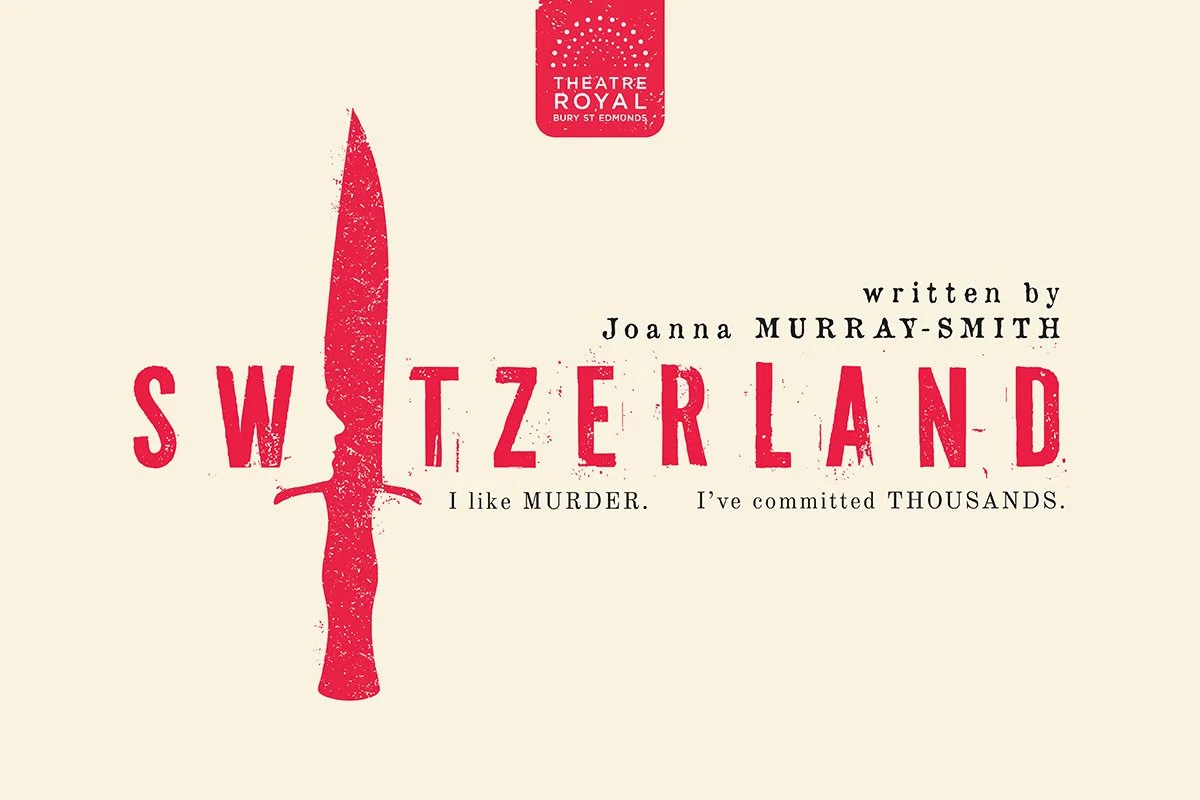
The wonderful Theatre Royal Bury St Edmunds has come up with another compelling production, this time Joanna Murray-Smith’s Switzerland, a powerful two-hander inspired by the life and work of Patricia Highsmith.
It is 1995 and Highsmith, creator of the chillingly amoral Tom Ripley, has retreated from the world to her home in the Swiss Alps. Surrounded by books, cigarettes and whisky, she has little time for visitors and even less for the New York literary establishment which, she believes, has never properly valued her: as a woman, a lesbian and, perhaps worst of all in its eyes, a writer of crime fiction.
Into this isolation comes Edward Ridgeway, a young man apparently dispatched by her New York publisher to persuade her to write one final Ripley novel. Jamie Sayers gives Edward just the right mixture of youthful diffidence and quiet persistence. Highsmith toys with him, insults him and tests him. But he proves surprisingly difficult to dislodge.
What starts as an entertaining verbal sparring match slowly becomes something altogether more sinister. Highsmith was the mistress of the psychological murder story, and Murray-Smith ingeniously turns the methods of her fiction back upon their creator. The boundary between Highsmith and Ripley, between writer and character, begins to blur.
Catherine Russell is magnificent as the clapped-out, cantankerous novelist. Cigarette in hand and whisky never far away, she unleashes great cascades of invective, softened by the wonderfully sharp barbs Murray-Smith gives her. And this is Highsmith, warts and much else. Her unapologetic racism and antisemitism are laid bare, along with her contempt for almost everyone and everything. Murray-Smith makes no attempt to turn her into a lovable eccentric. Russell gives us a woman of extraordinary literary gifts whose poisonous prejudices, bitterness and misanthropy have left her increasingly isolated. Yet beneath the armour we occasionally glimpse something more vulnerable: an ageing woman whose greatest creation, the murderous Tom Ripley, may have become her closest companion.
Sayers more than holds his own. That is essential, because Edward cannot remain simply the recipient of Highsmith’s insults. As the balance of power begins almost imperceptibly to shift, his performance changes with it. The interview becomes a contest; the contest becomes a psychological game; and the game becomes filled with danger.
Owen Calvert-Lyons’ production is beautifully controlled. Richard Kent’s apparently simple set is dominated by a huge cinematic window looking out onto the Alps - the spectacular view beyond Highsmith’s concrete retreat. At moments of tension that tranquillity gives way to swirling darkness, the landscape itself seeming to enter Highsmith’s disturbed imaginative world.
There is another effective counterpoint in the bursts of cheerful show tunes that punctuate the evening. Their breezy optimism seems almost cruel beside a worn-out woman from whose life happiness has long receded.
Switzerland is a highly intelligent play, but also a gripping piece of theatre. It does not offer us an easy psychological portrait of Patricia Highsmith. Instead, it draws us into her territory, where identities are unstable, charm can be dangerous and we can never be quite certain who is manipulating whom.
And, like the best of Highsmith’s own stories, it leaves plenty of questions behind when the lights go down.
By royal appointment at the arts theatre
Jane Asher is a superb actress with a warm smile. Once only do we see it in this production, when she takes her deserved bow at the end of this long play. This debut play by Daisy Goodwin has no room for nuance, and the dialogue is a matrix of mannered exchanges in an atmosphere of iron restraint.